
Vagabonding Case Study: Magda Biskup
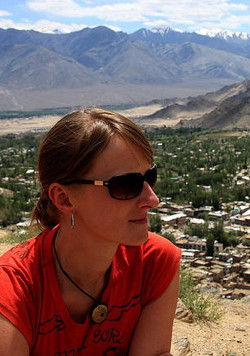
Magda Biskup
https://www.destination-world.net
Age: 33
Hometown: Rybnik, Poland. Now living in Sydney, Australia
Quote: “I never expected every single location to be breathtaking and exciting. This meant that I never really felt disappointed, I just liked some places more than others.”
How did you find out about Vagabonding, and how did you find it useful before and during the trip?
When I first came up with the idea of going for an extended world trip I started looking for some inspiration to stay focused on that dream. I found a number of great travel blogs and one of them mentioned Rolf’s book. I got it from my local library and instantly fell in love with it. After I finished reading I felt like everything was possible. The book really helped to make my dream come true.
How long were you on the road?
20 months, from December 2008 until August 2010.
Where all did you go?
I started in New Zealand and then went to the Philippines, Thailand, Myanmar, Laos, Cambodia, Vietnam, China and Mongolia. I then took a Trans-Siberian train to Moscow stopping on the way to see Lake Baikal. This leg of my trip took me about 7 months to complete. I spent a few weeks in Europe visiting family and friends and then went to South America for 6 months. It was supposed to be the end of the trip, but I couldn’t resist and went to Nepal and India for a few months.
What was your job or source of travel funding for this journey?
The entire trip was funded by the money I had earned before I left. I started saving about 15 months before I went traveling. Once I knew I really wanted to travel it wasn’t very hard to find the money. I believe it’s all the matter of having your priorities straight. Sure, I had to make some sacrifices and do without lots of things like takeaway lunches, new clothes etc., but I never felt like I was missing on life.
Did you work or volunteer on the road?
The idea for this trip was to take time off and enjoy freedom as much as possible, so I never worked. But I know that if I travel again for an extended period of time (which I’m sure will happen) I will definitely volunteer. This first long trip was very much about sightseeing and discovering beautiful places. Next time I travel I want to do it much slower, stay in different places for longer, learn more about the people and the culture and I believe that volunteering is one of the best ways of doing that.
Of all the places you visited, which was your favorite?
It’s really hard question – there were so many beautiful places! Argentina, New Zealand and Thailand are my favourite countries, but there were so many other amazing locations on the way – Salar de Uyuni and Altiplano in Bolivia, Galapagos, Lake Baikal in Russia, Ladakh in India… I could list many more.
Was there a place that was your least favorite, or most disappointing, or most challenging?
Some places were less interesting than others, but I never expected every single location to be breathtaking and exciting. This meant that I never really felt disappointed, I just liked some places more than others.
Did any of your pre-trip worries or concerns come true? Did you run into any problems or obstacles that you hadn’t anticipated?
To be honest my main fear was what was going to happen to me after I finish traveling. I always assumed that once I travel it would be just awesome, but the great concern was my future after the trip. I was seriously stressed about it the entire time I was planning the trip and then for the first few weeks on the road. But I very quickly relaxed and realised that the future is very much up to me.
The trip went surprisingly well in terms of avoiding problems. I never got robbed, never got seriously sick; however I happened to be in Santiago de Chile during the massive earthquake in February 2010. Luckily nothing happened to me.
Which travel gear proved most useful? Least useful?
I am a big believer in low tech travel gear and simplicity on the road. Less is better. My top 3 travel gadgets are bandana (which I used – depending on the circumstances – to cover my head, take the sweat from my face or clean my nose. It’s easy to wash and very small), compact umbrella (waterproof jacket is the last thing you want to wear when walking in rain in places like Bangkok) and a small water heater which boils a cup of water in about a minute. I used it all the time for making tea and coffee.
I didn’t have any branded clothing or other fancy travel gadgets and it worked pretty well for me. I had a tiny laptop with me which I used all the time. The least used gadget was my mobile phone. During the entire trip I used it maybe 10 times to send text messages. I used Skype to communicate with friend and family instead.
What are the rewards of the vagabonding lifestyle?
Definitely freedom. I loved the idea that there was no schedule to follow and that every day was completely up to me. The other great thing about being a vagabond is that you are faced with new situations and learn something new every day.
What are the challenges and sacrifices of the vagabonding lifestyle?
Being away from friends and family is definitely hard, but thanks to the modern technology it’s easier to stay in touch these days. The feeling of not belonging anywhere can be sometimes difficult to handle, but I believe that the benefits of being a vagabond outweigh the disadvantages.
What lessons did you learn on the road?
Many. I learned to be patient, which was a huge thing for me. It made me calmer and more relaxed. I learned that my life is in my hands and it’s up to me how I live it. I learned that people all over the world – despite different looks, religions, customs and way of life – just want to be happy and loved. I learned that having less things makes like much simpler. And I learned some Spanish
How did your personal definition of “vagabonding” develop over the course of the trip?
At first it was very much about visiting new places and moving from place to place. After a while I realised that there is much more to it. Vagabonding is living in harmony with yourself and challenging yourself constantly by interacting with different cultures.
If there was one thing you could have told yourself before the trip, what would it be?
I wish I knew about people who called themselves digital nomads. I only became aware of their existence when my trip ended. Those people support themselves earning money on the internet when living in the most amazing locations. They basically travel full time. Knowing about them back then would have maybe helped me to earn money to travel for longer than 20 months.
Any advice or tips for someone hoping to embark on a similar adventure?
Just do it. It is seriously worth any effort you might need to put into making it happen. There is this famous quote by Mark Twain that you can find on half of the travel blogs out there, and I think it’s so popular because it is so true. This quote is my motto in life:
Twenty years from now you will be more disappointed by the things that you didn’t do than by the ones you did do. So throw off the bowlines. Sail away from the safe harbor. Catch the trade winds in your sails. Explore. Dream. Discover.
When and where do you think you’ll take your next long-term journey?
I hope that within next 2 to 4 years I’ll be able to travel again. This time it would be much slower. I’d like to go to a place, rent a small apartment and live as a local for a few months, do some volunteering, maybe learn a bit of a language. As for destination I couldn’t be sure. My heart is thorn between Asia and Latin America.
| Twitter: DestinatioWorld | Website: www.destination-world.net |
Are you a Vagabonding reader planning, in the middle of, or returning from a journey? Would you like your travel blog or website to be featured on Vagabonding Case Studies? If so, drop us a line at casestudies@vagabonding.net and tell us a little about yourself.
July 7th, 2011 at 1:04 pm
i woould like so much to a trip just like yours