
Vagabonding Field Reports: Lost in translation in Tokyo
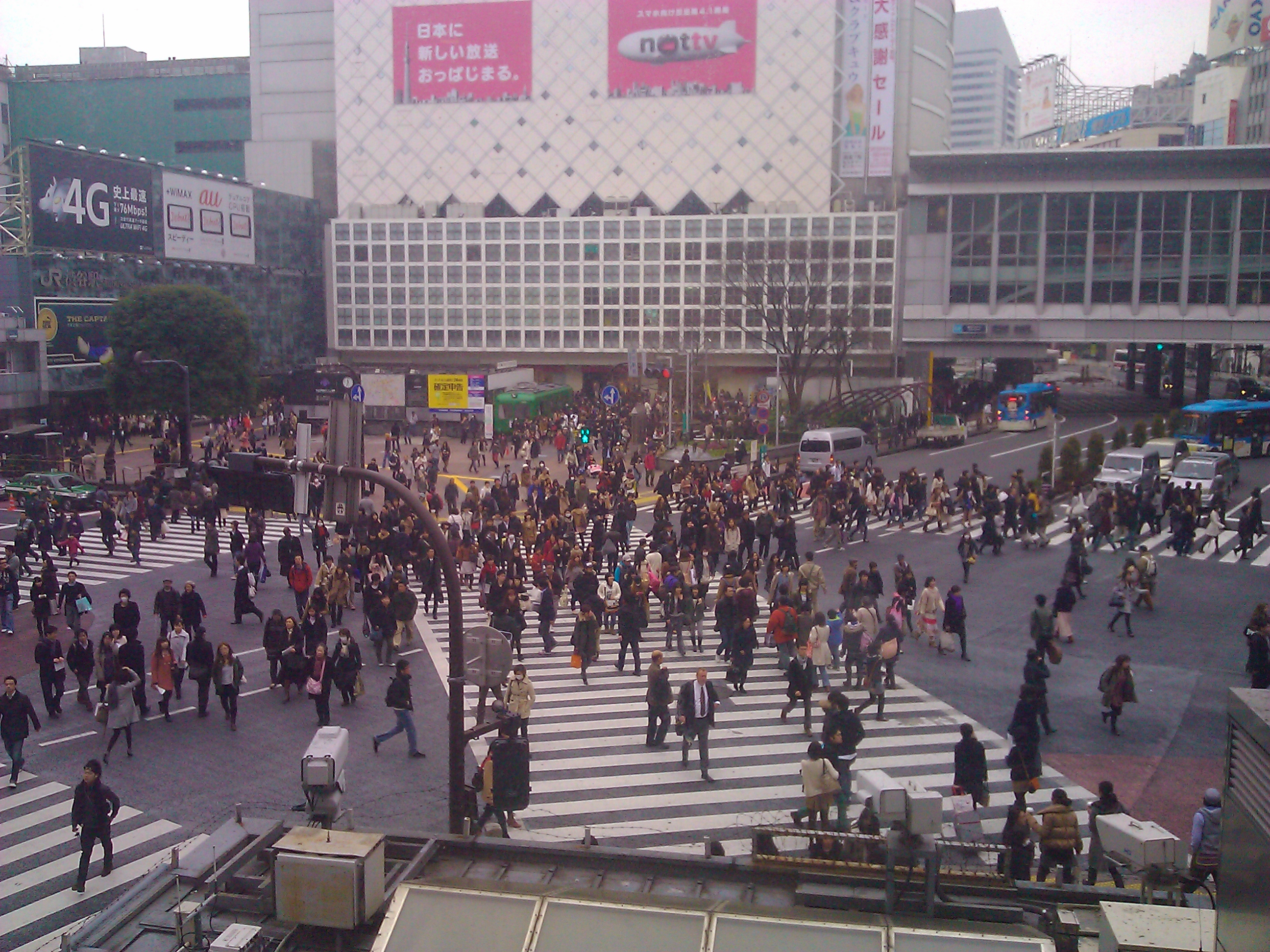
Shibuya crosswalk, Tokyo
35$ per day and I have been hosted 6 nights out of 7. My last night in Tokyo I slept in a internet-cafè which cost me 1450yen for 10 hours package+ 800 to secure my bag in a locker for 2 days.
What’s the strangest thing you’ve seen lately?
Sanitary masks. Many people in Japan wear sanitary masks when they have a flu or hay fever or any kind of allergies, so not to spread too much their infected germs around. Or simply as a protection against infected germs of sick people. I can’t tell if it’s more because the former or the latter, but in Tokyo at least 1 person out of 10 was wearing a mask.
What surprised me the most is that in a country where comics are a staple of their culture, and people try their best to be funny (if you ever seen Takeshi’s Castle, the tv show run by the genius know as Beat Takeshi, or Takeshi Kitano, you know what I am talking about), and also tend to be funny without meaning to be, all the sanitary masks are aseptic, boring, plain white.
I met a Taiwanese girl who show me proudly her colorful mask and told me this is the standard in their country. I am still wondering why in Japan nobody yet made a business painting a fake noise or mouth on the mask. At least the Japan flag, come on!
Describe a typical day:
I paid a tribute to 8 hours jet-lag and I unfortunately wasted most of the mornings in my first week, fighting sleep and the cold. Actually the first day I left my couchsurfing place at 3.30pm, but please don’t tell my host.
I have been playing the tourist, walking and sightseeing all day afternoon…
At night I was dining and partying with my hosts.
At late night trying to sleep while the jet lag and the many sake cups were giving me an hard time.
Describe an interesting conversation you had with a local:
Unfortunately my interaction with locals has been little so far, but Mayu and Yukie truly moved me. They both relocated to Okinawa after the tsunami: Mayu because her house in Fukushima was destroyed, Yukie because 6 months later, after measuring personally the level of radiations around her home in Saitama, which is much closer to Tokyo then Fukushima, found them still too dangerously above a safety line. There is too much we don’t know about what happened after that nuclear reactor exploded.
What do you like about where you are? Dislike?
I loved all the food, especially the stuff I tried randomly.
I loved using heated toilettes, getting lost in the streets, the nature and the onsen (hot spring) in Nikko.
I hated the frenectic pace, especially all around Shibuya, as much as I loved people watching its famous zebra crosswalk, protected by the glass of a Cafè facing the square.
I hated not being able to speak further than sumimasen (excuse me, but also I’m sorry), kudasai (please) and arigatou gozaimas (thank you) with local people.
Describe a challenge you faced:
After a crew of gaijins fluent in Japanese, composed by the Israeli karate master who was sitting next to me on the plain, my two american hosts and the australian girl I went with to Nikko, all took care of me, on my last night I was finally completely left on my own.
I wanted to try the experience of sleeping in a Internetto Koffee, so after leaving my bag in a locker at the train station, I venture to find one around Ueno. It was harder find the cafè than spending the night there. The space was comfortable enough, the free drinks a good plus, I wished only there were some mangas not written in Kanji.
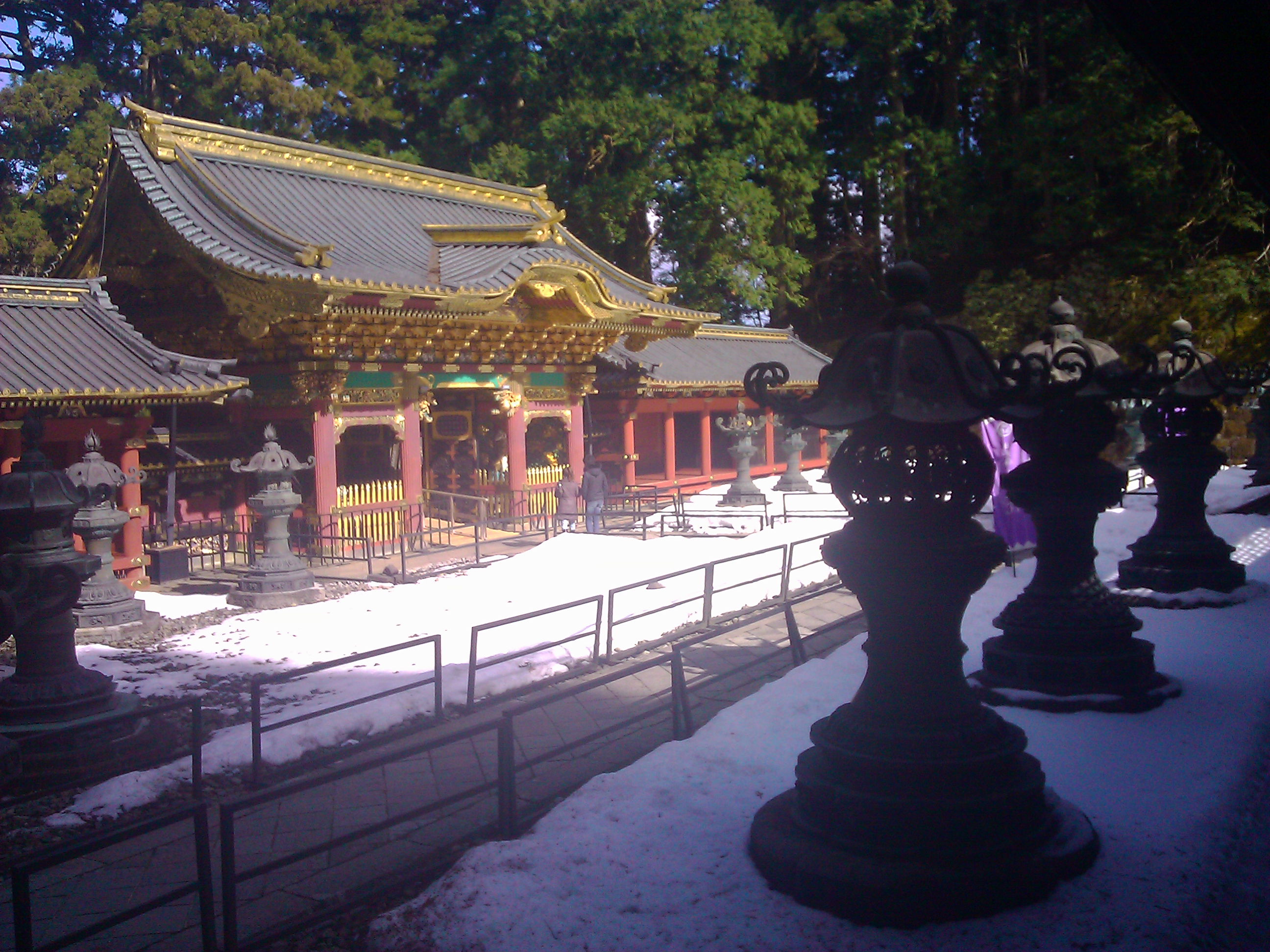
A beautiful temple in Nikko, 2hrs from Tokyo
What new lesson did you learn?
The (lack of) personal space is very little in Japan, especially the living spaces, compared not only to people in Scandinavia, but with any other country. My hosts were living in really small places, still they had no problem to share them with a stranger. The beauty of authentic hospitaly never cease to amaze me.
Where next?
After one week in Tokyo and two days around the beautiful temples and mountains of Nikko, a big change of scenery. Okinawa and his centenarians are awaiting me.
April 20th, 2012 at 12:03 pm
[…] Treats (livingif.com) The Eye of the Ibis – Inside a Bird Sanctuary (insidethetravellab.com) Lost in translation in Tokyo (vagablogging.net) Room With A View: The Citadel Of Qaitbay In Alexandria, Egypt (foxnomad.com) A […]
April 20th, 2012 at 7:00 pm
Hope you can solve the mystery of the white masks!
Happy traveling 🙂