
U.S. intelligence employs vagabonding ethic…and vagabonds?
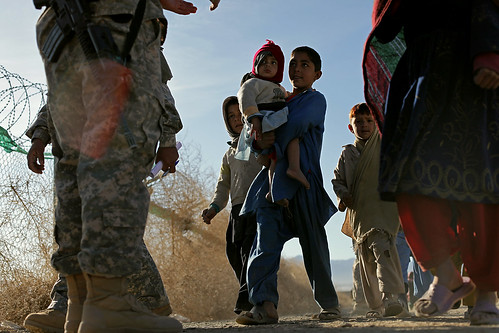
America’s top intelligence officer in Afghanistan has a plan for fixing intel operations in the country — and he’s turning to vagabonding techniques to do it. Maj. Gen. Michael Flynn points the way in a new report that isn’t bureaucratic hardtack — it’s sensible, easy to digest, and actually looks healthy.
First, the report’s view of the current situation:
“Eight years into the war in Afghanistan, the U.S. intelligence community is only marginally relevant to the overall strategy. Having focused the overwhelming majority of its collection efforts and analytical brainpower on insurgent groups, the vast intelligence apparatus is unable to answer fundamental questions about the environment in which U.S. and allied forces operate and the people they seek to persuade.”
The report goes on to describe U.S. intelligence officers as ignorant of local business, hazy about powerbrokers, incurious about development and village life, and disengaged from the communities they depend on (“whether aid workers or Afghan soldiers”).
Consider a U.S. operations officer’s “common complaint”: “I don’t want to say we’re clueless, but we are. We’re no more than fingernail deep in our understanding of the environment.” The lack of understanding is so profound that “many decision-makers rely more upon newspapers than military intelligence to obtain ‘ground truth.'”
And then the report puts it plainly: “The most salient problems are attitudinal, cultural, and human.”
The remedy follows. If you read the report here (PDF), you’ll notice fascinating parallels between the recommendations for success in Afghanistan and the vagabonding ethic of independent travel. The similarities make sense: At its core, the report aims to create improved methods for interacting with a foreign place.
For example, the report advocates personal autonomy, fluid itineraries, and improvising:
“Some civilian analysts…will be empowered to move between field elements in order to personally visit the collectors of information at the grassroots level and carry that information back with them. Analysts’ Cold War habit of sitting back and waiting for information to fall into their laps does not work in today’s warfare and must end.”
In other words, knowledge of a place and its people won’t fall into your lap while you’re sitting back tanning in a poolside recliner.
Again, I urge you to read the report and discover your own parallels. Much of it boils down to the idea that what’s important is already in plain sight, we just need to open our eyes. (Additional analysis is available at Danger Room (a related view: intel aims to learn from journalists), Small Wars Journal, and CNN.)
Now here comes the controversial prediction:
The report says “analysts must be empowered to methodically identify everyone who collects valuable information, visit them in the field, build mutually beneficial relationships with them, and bring back information.” Everyone means everyone, including journalists and “willing NGOs and development organizations.”
If the U.S. is already getting more reliable intelligence from journalists than from its own sources, and if it aims to broaden information collection as stated above, then a logical next step includes working with independent travelers. You know, those curious, engaged folks who venture into strange places and record what they find.
Come on, you might say. The stereotypical backpacker is only loyal to their Che Guevara t-shirt, and there aren’t vagabonds in Afghanistan anyway. Not happening.
Maybe not in Afghanistan right now, but I’ll bet there’s a silent contingent of travelers scattered around the globe with enough respect for basic American freedoms to be willing to get involved, wherever and whenever the need appears.
—
Note: This unorthodox report owes its perspective to its non-traditional team of authors: In addition to Afghanistan intel chief Maj. Gen. Michael Flynn, “it’s co-authored by Paul Batchelor, of the Defense Intelligence Agency’s Senior Executive Service, and by Marine Capt. Matt Pottinger…a former Wall Street Journal reporter [see last link above] and a rising star in military intelligence: He’s smart, articulate, and has forwarded some innovative, off-the-shelf solutions for fighting roadside bombs.” (via Danger Room)
Related:
Gadling — Anthropologists told to get out of the wars (12/4/09)
Danger Room’s take on The Atlantic’s Gurkhas-in-Afghanistan video
Photo by ISAFmedia via Flickr.
January 6th, 2010 at 2:16 pm
[…] U.S. intelligence employs vagabonding ethic…and vagabonds? […]
January 6th, 2010 at 7:18 pm
“respect for [SPREADING] basic American freedoms” seems to directly conflict with my understanding of what you call “vagabond” style traveling. It seems like we should travel with an openmindedness to learn about new places WITHOUT then using this new-found knowledge to manipulate and then smother the world with our own selfunderstanding (aka ‘American Freedoms’).